When kyphosis is suspected or diagnosed in children, earlier treatment is best. At Scoliosis 3DC®, we work with patients to reduce the asymmetric loading on the spinal joints during growth. This allows the spine to grow in a more normal physiological position, by decreasing anterior wedging and increasing flexibility to prevent progression and pain. Our non-surgical treatment is for those who prefer to try and improve quality of life and/or avoid surgery. Results are usually better for patients with more immature spines, as is the opportunity for some degree of improvement.
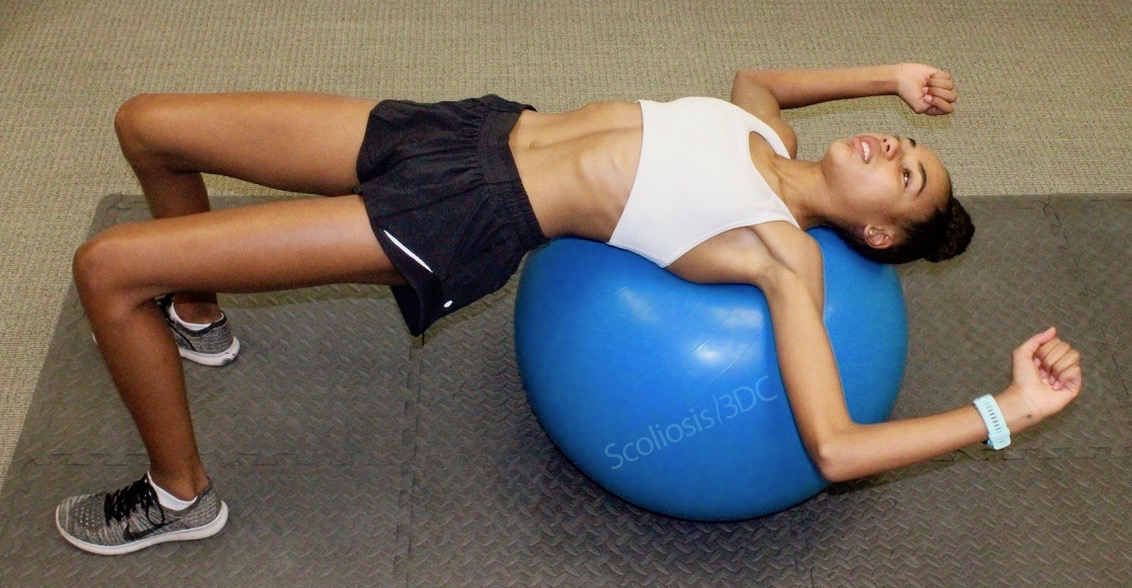
Compared with our scoliosis program, fewer hours of instruction are needed for treatment. This is because the condition affects only one spinal plane whereas scoliosis affects all three planes. Patients with kyphoscoliosis may need a few more hours of instruction, depending on the severity of the scoliosis. Patients have the option for Schroth anti-kyphotic exercises and/or compatible bracing with the Kyphologic brace®.
Kyphosis Brace
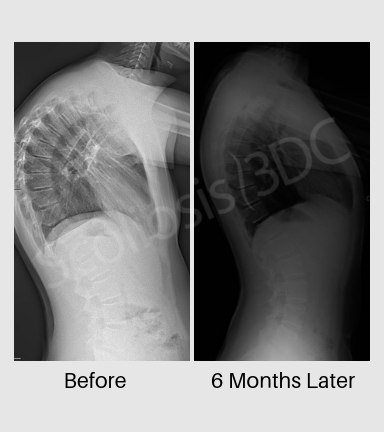
We offer an innovative brace called the Kyphologic brace. This brace, designed in Germany, is manufactured in the US and only available at Scoliosis 3DC® and Shriners Hospital in Honolulu, Hawaii. Each brace is custom-designed to address thoracic kyphosis and can be measured, produced and fit in our Boston area office within a 4-day timeframe. The patients we’ve fit find the Kyphologic brace a more tolerable solution than other kyphosis braces, such as the Milwaukee brace. The Kyphologic brace is recommended for patients with thoracic kyphosis of 55º or more.
For patients with thoracolumbar or lumbar kyphosis, please refer to the Physiologic Brace.